10 ways to learn a language
10 ways to learn a language
By the Roadmap+ Team
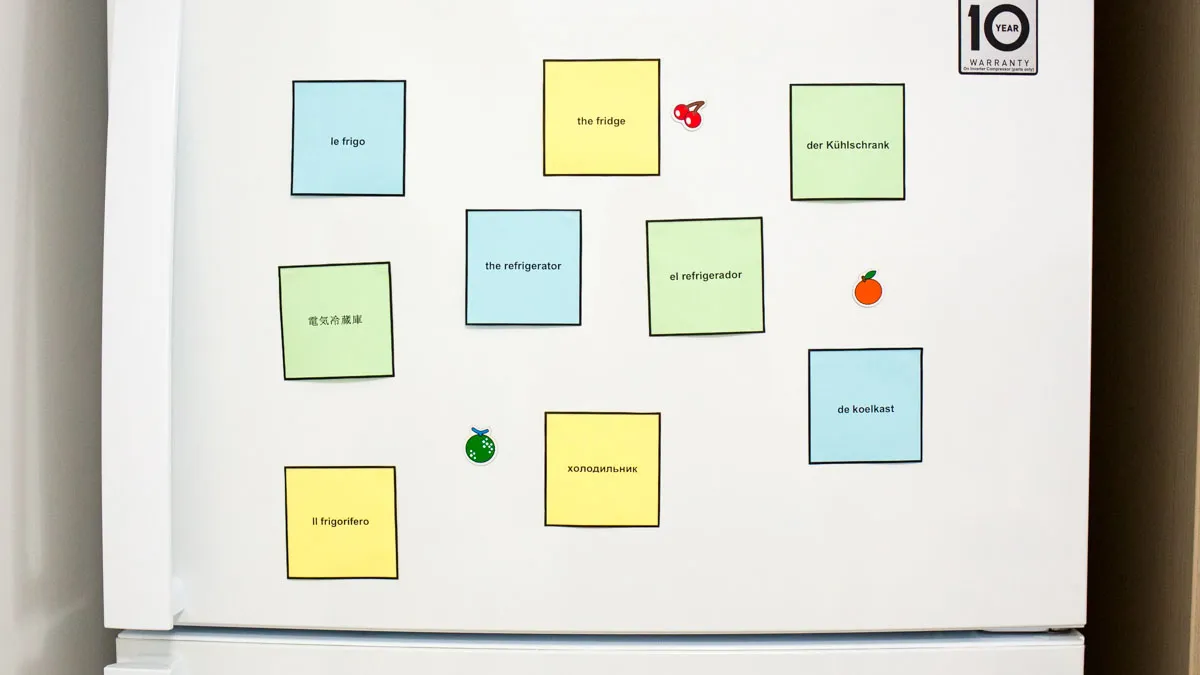
The key to learning any foreign language is to immerse yourself in it. When you're not living in a country where it's an official language, there are numerous ways you can still achieve this. Using a combination of the below tips will help you apply and remember grammar and vocabulary while permeating every part of your life the way it would living abroad.
Do a little each day ... an extra 20 minutes each day to review will keep the language active and recent in your mind
- Flag items (nouns) around the home, office, in your bag and on your desk using Post-Its or other sticky notes. Read the Post-Its aloud each time you come across or look at the item until it sticks. Don't forget to include the article or gender if applicable.
- Carry flashcards and only add problem words and grammar. Make your own cards, buy ready made cards, or use an app. Alternatively, use a narrow-ish notebook (e.g. Moleskine) as a vocabulary and grammar book, dividing each page into two: one side for word or grammar example, the other side for the translation or explanation.
- Read. Books, magazines, blogs, anything. Try to get your hands on topics that interest you (e.g. fashion or car magazine). If you don't have access to international press (often found in train stations or airports in large cities), look for news or magazine sites and apps. If you're just beginning a language, try children's books.
- Listen. Listening is frequently cited as the most challenging aspect of language learning. Furthermore, dialects, speed and lack of context impinge on our ability to understand freely. Listening to music, podcasts and supplementary audio material as a priority can help us get up to speed in listening and ultimately, interacting, in our target languages. It can be done at the gym, on the daily commute or whenever you get a chance.
- Watch TV shows and movies from a country that speaks the language and use subtitles or, if you're at an advanced level, subtitles for the hearing impaired. TV advertisements are also helpful as they are usually short and the topic is often clear. Watching TV shows, films and sometimes ads, also gives you some insight into cultural norms and a natural feel for how the language is used in real life. Often, what the textbooks tell us is outdated or too formal.
- Apply and exchange. If you can't go on a study or cultural exchange, find a friend locally using MeetUp or an online language exchange website. Finding someone locally who wants to practice your native language in exchange for you practicing theirs provides a casual and fun environment to apply, try and learn things about the language and culture you can't find in a book.
- Use quality resources. There's a lot of free language resources available online, but the most reliable resources still come in book form, some language publisher apps (that generally digitize books and CDs) and classes. If you're unsure of what to use or are self-learning, check consulate or embassy websites to find out if there are official language institutions (e.g. the Goethe Institut, Alliance Française, the Japan Foundation) and see what they recommend. Alternatively, see what local colleges are using and compare Amazon reviews. If online and free is the last or only resort, Duolingo is by far the most reliable, as errors are regularly updated by native speakers from around the world.
- Test yourself. Many popular languages have an official language institution that conduct periodical exams. By signing up to an exam appropriate to your level, you'll have a widely accepted guide to focus areas, increase motivation to continue on to a higher level, and have a globally recognized certificate or diploma opening up vast opportunities to work or study.
- Do a little each day. Because learning a language requires a good memory and application. Cramming doesn't work very well for most people when it comes to learning languages, so spending an extra 20 minutes each day to review recent material and ongoing problem areas will keep the language active and recent in your mind, rather than overloading yourself once or twice a week.
- Experiment and make mistakes. Go beyond the materials and exercises. Create your own sentences based on what you think you would say in certain situations, about your interests, how you spend your day, how you spent today. When you learn a new piece of grammar, try to use it in ways that apply to you and your life. Look up the words you need to fill in the blanks.
Category:
For updates on new tools and apps, subscribe to our newsletter. We only send these out when there's something truly exciting - we won't spam you.