10 ways to remember what you study
10 ways to remember what you study
By the Roadmap+ Team
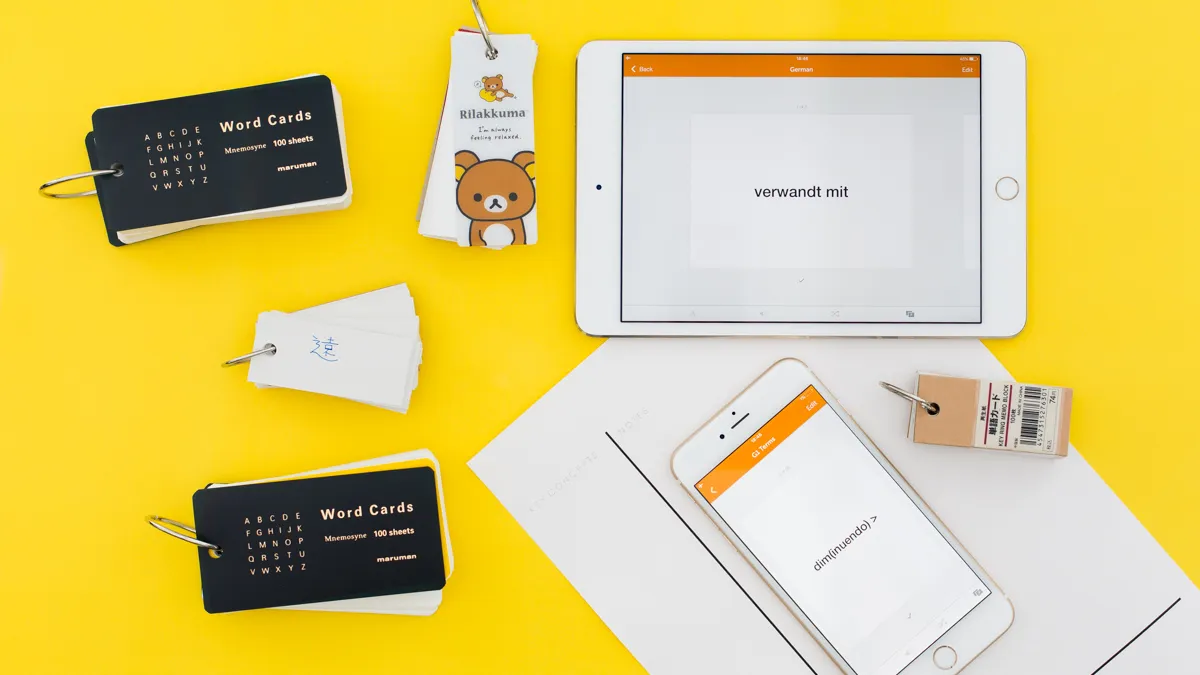
While it's important to learn and understand material in order to apply it successfully at school, university or in real life, unfortunately there are instances and entire subjects that require memorization. Maybe a teacher doesn't believe in formula sheets, because learning a language can't be done without memorizing vocabulary, or maybe you just need to remember certain facts for a test or phrases and keywords for a presentation. Memory skill doesn't come naturally to everyone, so here are 10 ways to ease the pain next time it can't be avoided.
- Flashcards. Easily the most popular method for memorizing concepts, formulas and vocabulary. Write what you need to remember on one side and on the other a question, hint, translation, solution or examples, depending on the subject.
Free apps, such as Chegg Flashcards+ on iOS and Android make it easier to keep flashcards with you wherever you go. - Pinboards and whiteboards. Most stationery shops sell boards of all sizes and textures for hanging on walls or sitting on desks. Use Post-Its, paper, magnets, pins and printouts of material you really need to know. If there isn't enough space, note subtopics that need attention.
If boards aren't your thing, decorate a mobile, tablet or desktop background and update it regularly using tools like Canva, Microsoft PowerPoint (File > Save As > [select Format]) or Apple's Keynote (File > Export To > Images > [select Format]). - Rewrite notes. The easiest way to do this is by having a pad or template for class notes that you revisit after class or the following day to review. Review these notes the next day and rewrite them in your own words and own style of structuring information on a page.
Always paraphrase when using a textbook, but keep it short so that you have usable notes come exam time. You'll remember more when you chunk information and have fewer fluff words. - Visual notes. Even if you aren't a visual learner, the use of color, images, structured page layouts and tools like mind maps can help you make relevant and individualized learning connections. Arrange notes in such a way that you can quickly see and look up what you need to know, but avoid clutter.
- Explain and test. By explaining and fleshing out a concept to another person, you'll improve your own understanding of the subject matter by putting it in your own words whilst testing how much you recall.
Find a study buddy or group and test each other during the semester and through the holidays. In the process you'll feel more focused and accountable to your peers and possibly more motivated to learn by seeing how well others are doing. Comparing in moderation can be inspiring and motivating! - Walk and learn. Studies show walking while studying improves retention. Listen to a recorded lesson or something you've recorded yourself while pacing in your room, walking outdoors or on a treadmill at the gym.
- Breaks. Make better use of time spent waiting in lines, on public transport, at the gym, during meal breaks or whenever you have limited time. These moments will quickly add up to hours of unofficial study time.
Ready yourself for these moments by loading your phone or tablet with videos, recordings, lecture notes and synced notebooks. Re-watch and re-read. - Exercise regularly. Various studies have shown long-term moderate to high intensity exercise changes parts of the brain associated with learning and memory across all age groups, including dementia sufferers. If you take the World Health Organization's recommendation of at least 120 minutes (approx. 20 minutes each day of the week) of exercise per week for adults or 300 minutes (approx. 45 minutes a day) per week for additional health benefits, you should be on track to seeing an improvement physically and mentally.
- Sleep. Like exercise, sleeping is said to cause changes in the brain that improve memory, but getting enough sleep also improves focus and your efforts to retain information. How much sleep you need varies by age group, but the minimum for adults is seven hours. And if you need help sleeping, start with point eight above.
- Consistency. Like all good habits, a little everyday really does go a long way. It's hard to deny that it's easier for most of us to recall what we did yesterday than what we did two weeks ago, so by reducing the gap between study sessions, you'll more easily recall and build upon what you did last.
Block out and commit to at least 10-20 minutes per problem subject daily to review what's been covered so far. If you're going to be examined and it's not a subject you're passionate about or something you struggle with that you know isn't actually going to be of much use in the future, narrow in on material you need to know to pass and move on.
memory skill doesn't come naturally to everyone
Category:
For updates on new tools and apps, subscribe to our newsletter. We only send these out when there's something truly exciting - we won't spam you.