A simple, practical planner
A simple, practical planner
By the Roadmap+ Team
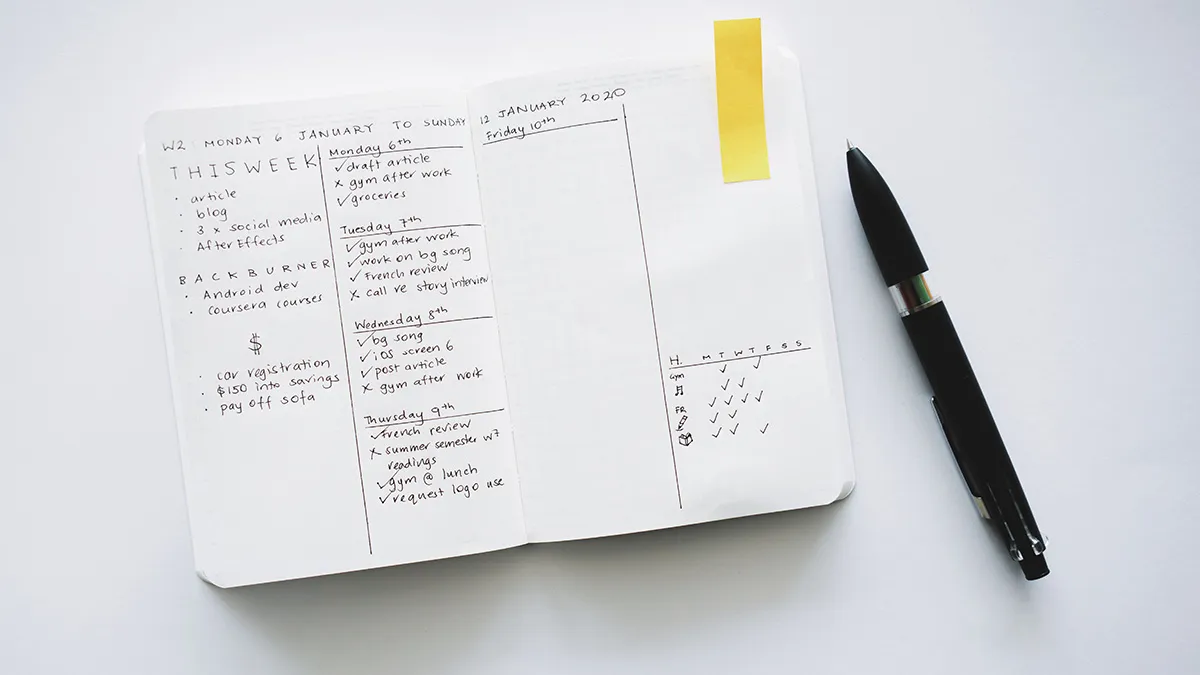
A journal for planning and tracking habits can be a rewarding and constructive tool for many of us. For others, it can become a source of anxiety eventuating in neglect if we allow ourselves to get swept up in over-planning, over-tracking or over-decorating. As passion planners, goal-setting planners and bullet journals became increasingly popular over the last five to ten years, the basic premise of keeping a planner became a task that demands its own block of time.
it's important to keep a planner just that – a notebook used to plan each day
For the unfamiliar, a distinction must first be made between having a journal for planning and tracking versus the traditional purpose of a journal or diary, being an account of the day describing feelings, thoughts and events. Here, we're referring to the former.
The popularity of customized journaling is likely linked to how busy people feel in the twenty-first century, but whether our busyness is real or an illusion is a discussion for another article. It's true that with the invention of the smartphone, the ease in which interruptions and distractions occur or the way social media can rob us of hours in a single day, we often feel overwhelmed and overworked. That's why for some of us, it's important to keep a planner just that – a notebook used to plan each day.
For a planner to be productively effective, it shouldn't consume much of your day; quite the contrary. As a tool for planning and getting things done, it should be:
- a printed, off-the-shelf diary or a regular notebook
- grid or dot grid paper means you won't have to rule up each day, nor habit, sleep or water trackers
- simple and clean, without images or its own customizations
- lightweight and portable
- presentable, especially in a professional environment
- bookmarked at the current week
- depending on your needs, each day or week should list:
- to dos
- meetings
- personal events
- a habit tracker (aim for weekly, unless it's water tracking, medication, etc.)
The weekly setup shouldn't consume more than five to 10 minutes, and filling in your plans each day or on a whim should be straightforward – jot it down in the day's space. A single colored pen is sufficient, no stickers, no calligraphy brush pens, no washi tape.
But why not use an app? Numerous studies have found writing helps you remember what you wrote down, but as writing is generally slower than typing, you naturally have more time to process what you're writing. That means not only do you give more thought to your schedule, tasks and long-term goals, but you're more likely to remember to action them. If your plans and actionable items are hidden away in an app, you're less likely to check it regularly and maintain momentum. Finally, digital devices rely on a battery, which equates to being unreliable. Even as app developers, an app for tracking and jotting down to dos is helpful, but a paper backup is priceless when you've had a long day on the phone or tablet and they become inaccessible at the most inopportune moment.
So if you've been struggling with maintaining a planner and don't feel it's supporting your productivity, sticking to a simple and practical journal will be a liberating experience, and one that will free you up to do what really matters. Rather than primp the daily to dos, use the time to work on them.
Category:
For updates on new tools and apps, subscribe to our newsletter. We only send these out when there's something truly exciting - we won't spam you.