DSLR vs mirrorless cameras
DSLR vs mirrorless cameras
By the Roadmap+ Team
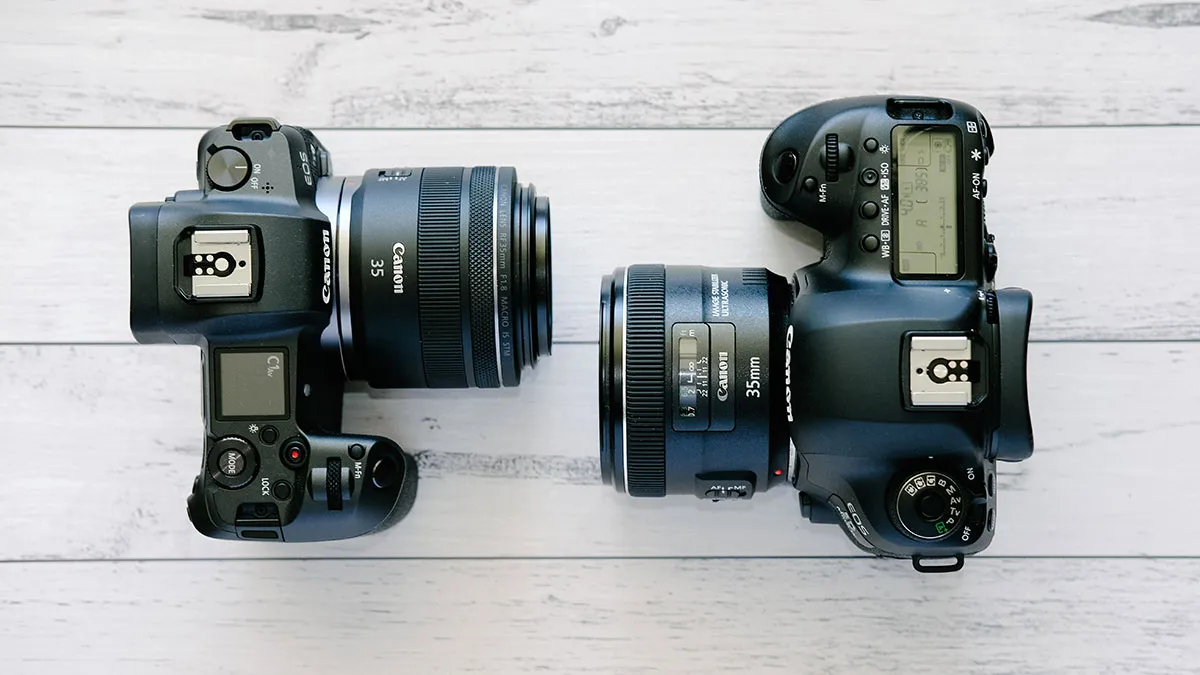
In the past, most serious cameras were SLRs and later their digital equivalent, the DSLR. But over the last decade, mirrorless cameras have become increasingly popular due to their size, price and performance. So what is the differences between the two?
DSLRs use a mirror and a pentaprism to display what the camera captures through its lens in the viewfinder. When the shutter button is pressed, the mirror moves up and the light hits the sensor, instead of the mirror, allowing for the image to be recorded.
Mirrorless cameras, on the other hand, do not have a mirror or pentaprism. The light gathered by the lens always hits the sensor and is shown on a digital display or in an electronic viewfinder (EVF). Because of the lack of mirror mechanism and pentaprism, a mirrorless camera can be made smaller and lighter than a DSLR. This advantage applies to the camera body and doesn't necessarily extend to the lens. Therefore, if a compact and lightweight system is desired, a mirrorless system will be the better way to go. In terms of handling, many find a larger DSLR, preferable.
depends mainly on your style of shooting and personal preferences
Another significant difference between the two types of systems is how the image is displayed before it is taken. In a DSLR, the photographer sees the picture through the lens and pentaprism, a bit like looking through a telescope. Only after taking the picture, the result of the chosen exposure and camera settings can be seen.
In a mirrorless camera, what is shown on the display or the view finder shows what the photo will look like before pressing the shutter button. This difference is invaluable to newbies and casual photographers alike, as it displays the camera's settings and increases 'keeper rate', the number of photos that are good enough to keep. In general, mirrorless cameras display more information in the EVF and that information can also be customized, which is not a common feature in DSLRs. However, depending on their size, resolution and refresh rate, a mirrorless EVF is not as comfortable to look at as a traditional viewfinder, so this may be a moot point.
Autofocus also differs between the two systems. Mirrorless cameras have more focus points spread out over most of the image area, while DSLRs usually have less points arranged around the centre of the image, which makes focussing on something towards the edge of the picture challenging or less precise. To make up for that, DSLRs have an advantage in speed of acquiring focus and tracking moving subjects and is understandably why DSLRs are still popular with sports and wildlife photographers. But with ever-faster processors, mirrorless cameras are catching up in this area as well.
Battery life is a win for DSLRs as mirrorless cameras always have their EVF or back display on while in use. This is easily solved by having one or more spare batteries, but that's more outlay and more to carry. In comparison, a picture is visible through the DSLR viewfinder even when the camera is off, resulting in an average day of shooting with just one battery.
Where both systems fare similarly is in image quality – you can achieve the same image using a mirrorless camera as you can on a DSLR. Over the past decade, technological advances have closed the gap between mirrorless cameras and DSLRs, making the differences less extreme. We recently made the switch from a Canon 5D Mark IV DSLR to the mirrorless equivalent, the Canon EOS R, in order to reduce everyday carry and bag weight without comprising image quality.
In the early days of digital cameras, manufacturers constantly improved their products introducing significant changes frequently. Lately, development has been incremental. No matter which camera you choose in 2021, all price segments have gotten so good technologically that there are no cameras that take a bad photograph. Which brand or type of camera you choose depends mainly on your style of shooting and personal preferences and once you've made the decision, the most important thing is to take photos and stop worrying about gear.
Category:
For updates on new tools and apps, subscribe to our newsletter. We only send these out when there's something truly exciting - we won't spam you.