Getting started with the Japanese language
Getting started with the Japanese language
By the Roadmap+ Team
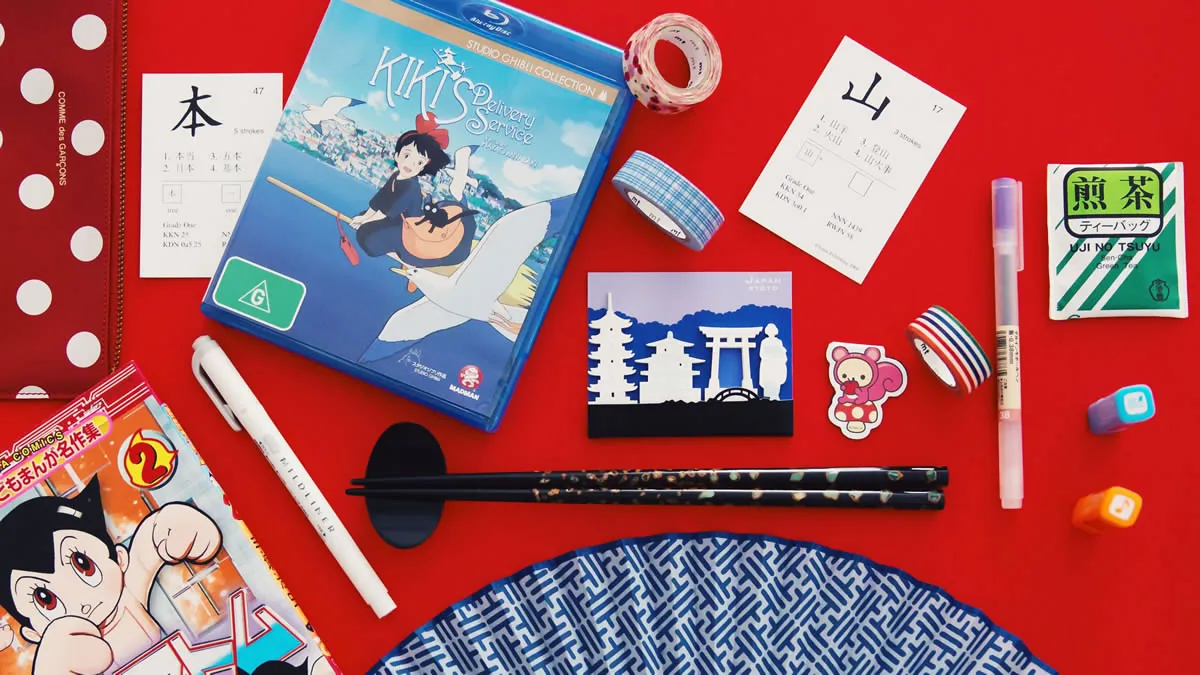
We've had a lot of questions on tumblr about how to get started in learning Japanese, so we thought it necessary to summarize what we've found useful throughout our own studies and hopefully these will help you jump-start your own adventures in Japanese.
Kana
The most important first step in learning Japanese is to learn hiragana followed immediately by katakana, collectively known as kana. Most textbooks, online resources and apps require you read (and ultimately, write) kana before even saying konnichiwa.
If you have an iPad, by far the best app for learning kana is Study Japanese for iPad by FutureJones. It features tracing exercises, quizzes, sound and even relaxing music so you can imagine meditatively practicing calligraphy in the comfort of your own sukiya-zukuri.
For iPhone, two free apps that allow you to practice writing are by hk2006 – one for hiragana and one for katakana.
There are cheat sheets on www.textfugu.com. Again, one for hiragana and one for katakana, as well as a hiragana stroke order sheet.
Note, if you're going to use apps for learning kana (or kanji), using a stylus is a must as it's more natural, so you're more likely to remember the characters and strokes that way.
Kanji
While we're on the topic of writing, it's said knowledge of around 2000 kanji is required in order to live without issues. It seems like a lot and it is, but it's not supposed to be an overnight process either. Japanese children learn kanji all through school and the less often used kanji (such as rei or zero) are often looked up the way we look up a word when we forget its spelling - which is another complicated exercise in itself that I won't cover here.
As for myself, in combination with college-prescribed textbooks, I follow the JLPT kanji lists as a guide, beginning at N5, the most basic level. The app I use to memorize and test myself is JLPT Study, 1-5 Level Kanji and Vocabulary Japanese Language Proficiency though it doesn't include stroke order. For stroke order, see the dictionary section below.
The Tuttle Publishing flashcards that I use provide most of N5 and N4 in the first box and I simply make my own for those missing. They're also on Amazon. There are also different flashcards for sale at White Rabbit Japan, which claim to include all JLPT N5 and N4 kanji. In the interim, you could also use this list of JLPT kanji.
Pens for writing
What never seems to be mentioned to beginners is the need to purchase a fine tip/nib pen, particularly once you move on to kanji with any number of tiny strokes that must be legible. A Jetstream or Signo at 0.5 or less are my personal picks and since using them, I avoid writing with anything else in any language. Muji pens are ok, but they're very inky, for lack of a better word, so if you must, then 0.38 or less. There are numerous stores online that sell Uni-ball pens or if you're lucky, try your local Kinokuniya. I'm no expert on brushes, so I won't venture there.
...it's important to keep it fun and get a feel for the language outside of a textbook
Books and book-like apps
The most useful apps for learning Japanese at a beginner or intermediate level I've come across have been Human Japanese, available on most platforms and devices. Human Japanese and Human Japanese Intermediate take you through the kana (including stroke order animations, only you can't write inside the apps), give you some interesting background on culture, introduce grammar in a friendly and understandable way and (optionally) quiz you at the end of each chapter. It's not free, but I would say if there was just one thing you could purchase when starting out, it's this.
If you prefer paper books, the Genki books were used by The Japan Foundation I went to and are ideal for self-study. There are also apps that go with the books on conjugations, vocabulary and kanji, but you needn't have the books to find the apps useful (search 'genki' in the iTunes App Store). However, I believe The Japan Foundation is using Marugoto now, which has grades like the Common European Framework of Reference for Languages (CEFR), but it doesn't seem to work the same way, or at least not yet. It appears you can achieve the levels by taking The Japan Foundation's courses and whatever means of testing is used within the courses. Whereas anyone can sit for a European language exam that results in a grade based on CEFR (i.e. A1-C2). As I haven't been in a class using Marugoto and I haven't seen inside any of the books, I can't confidently recommend them. I would be wary of just ordering one without seeing inside first, as most CEFR books are entirely in the language you're learning, as in, instructions are in that language.
Online language learning resources
The best and most legitimate resources can be found on most Japan Foundation websites, such as www.jpf.org.au/resources/index.html#2. My top picks for beginners are:
- Erin A collection of videos with accompanying exercises. The only con is that it's all in Flash, meaning no iPhones or iPads.
- Nihongo-e-na Great for finding even more resources, just click on a topic at the top-left in the Site Search section.
There are dozens of short videos here by Punipuni on YouTube. The videos are divided up into vocabulary, grammar, phrases and more.
Tae Kim's Guide to Learning Japanese is perfect for understanding Japanese grammar. Various downloadable versions of the website and app links are at www.guidetojapanese.org/learn/grammar.
Tae Kim also has a page dedicated to setting up Japanese on your computer, so that you can read and write it in the applications you normally use. This is maybe one of the first things you should do after learning kana as you'll need to look things up or maybe even do your own searches in Japanese.
JapanesePod101 has a lot of useful stuff in their podcasts and online, but you'll eventually have to pay something if you want all the notes that go with the lessons. If you subscribe to the newsletter you'll receive frequent tips and limited access, but I wouldn't recommend it to complete beginners who need to do more than just listen or watch, unless you're willing to $ubscribe.
Magazines
Once you get past kana, you might like to try Hiragana Times. It's a magazine available in various formats (including iPad) that's filled with culture and the kawaii stuff we all love. The best part about it is that each article is written in English and Japanese paragraph-by-paragraph, so it's not confusing. The only thing you need to do - other than understand English - is read kana as all kanji has the furigana (i.e. kanji in kana) written below. You can subscribe or buy single issues.
Dictionary
The Jisho dictionary online is pretty good and I can't stress enough how important it is NOT to use Google Translate for Japanese! Once you're in the swing of things, you'll see what I mean.
As for dictionary apps, the best I've come across so far which was also recommended by university is Japanese by renzo Inc. It's a whole universe of Japanese in there, including the ability to create your own vocabulary list, see kanji stroke order animations not to mention kana animations and charts, there are categories ('Classifications' lists of words), even JLPT kanji and vocabulary lists. It's also useful for conjugating verbs. Under each verb is a list that should be comprehensive enough for the first year or two of studying. I can't believe it's free.
Culture and fluency
As with any foreign language study, it's important to keep it fun and get a feel for the language outside of a textbook or educational resource early on. You'll find what's taught in a textbook is often stiff, unnatural or old-fashioned. A great place to practice what you know, learn new words and reach fluency fast is Crunchyroll. Anime and drama (non-anime comedy or comedy-drama) programs are subtitled and can be streamed for free with ads, or paid in HD without ads plus exclusive content and monthly free HD passes for friends. Yes, there's always YouTube, but it's harder to find something worth watching, let alone something new, and it's almost impossible to find something with subtitles.
Music is also another great way to hear Japanese all the time. Of course, everyone has their own taste in music, but one way to find out what's popular is to Google 'jpop blog' or check out the current charts.
Shopping
Finally, if you want to shop for unusual Japanese things, including useful tools for study, then White Rabbit Japan has something for most Japanophiles (is that what we're called?). Amazon.co.jp also ships many products internationally, including music and movies, just be careful with region or find a region-free player.
As none of the Japanese learners in our team use Android, we welcome recommendations and will credit your blog or other social media account accordingly. Please feel free to reach out to us on social media or by email and we'll get back to you within 2-3 days.
Category:
For updates on new tools and apps, subscribe to our newsletter. We only send these out when there's something truly exciting - we won't spam you.