Downsize journaling in 2026
Downsize journaling in 2026
By the Roadmap+ Team
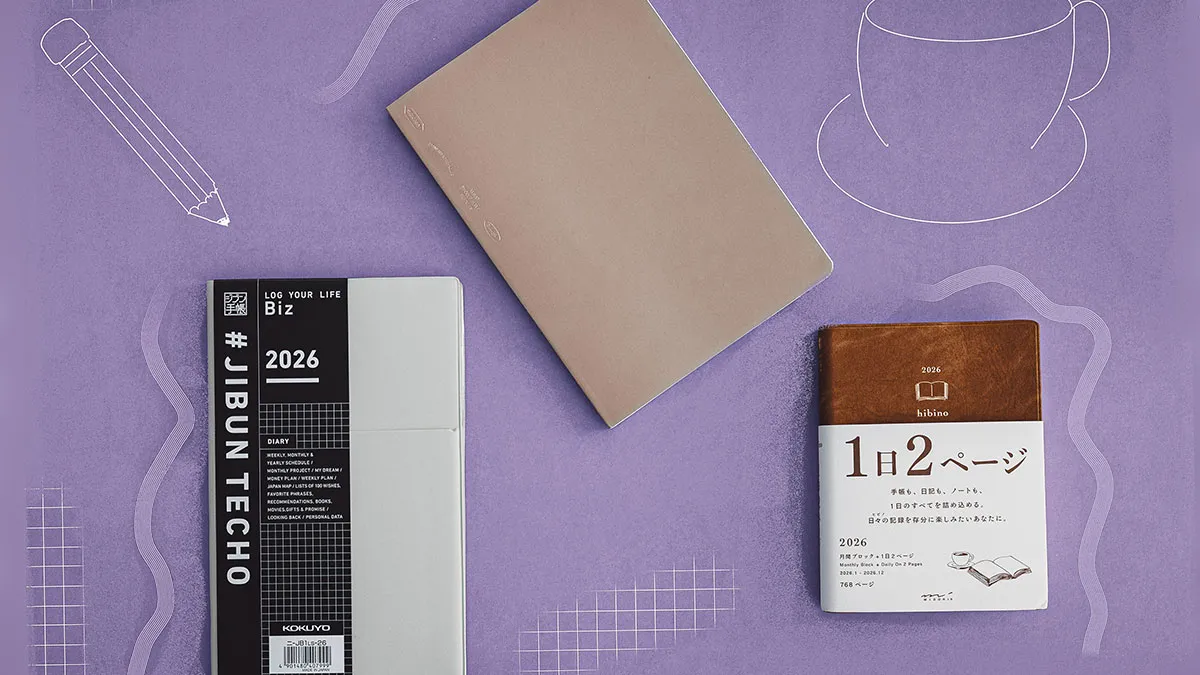
The purchasing season of 2026 journals is in full swing with almost every popular journal, planner and diary in their 2026 editions now available. Swathes of complementary accessories also come into the limelight during this season, sometimes adding hundreds of dollars to already significant planner budgets. With the ongoing cost of living crises in most parts of the world, dire job markets and tariffs affecting many planner afficionados, we propose making next year the one you spend more time doing than journaling, beginning with consciously ordering only the absolute necessities for 2026.
To effectively cut costs and downsize your journal stack, it's important to assess, re-assess and be realistic about what exactly it is that you want or need to plan. For the average planner addict, there's nothing worse than a partially used dated planner or having to start a new planner mid-year. So let's avoid those scenarios and hold back on planner season orders while carefully thinking about what, how and why we want to plan, as opposed to buying what's cute, aesthetic or out of habit this time of year.
What do you want to plan?
Start with what you want to plan or log by figuring out what you're most likely to be doing next year. Think work, study, family, vacation and personal goals. Do you need a dedicated planner that's made for school or university, work or private life? Could you combine personal, school and/or work into one because you only need to track due dates? Do you need to plan or track specific data for an important work or personal project for a limited period? It could be a diet or exercise regime, 12-week bootcamp of some sort, school homework, university assessments, content calendar, daily vocabulary, regular art sessions, a travel log, or side hustle detail?
Do you keep or want to keep a daily written reflection? Do you want to have a way to schedule hours, days, weeks and months? Do you need that extra space daily or weekly to add extra notes, images or important data? Depending how much you want and need to plan, track and decorate, hybrid (paper and digital) or multiple planners may be justified.
Why do you want to plan?
Possibly the most important requirement is why you want, or need, to journal – is it out of necessity (e.g. manage high workload, get better grades, lose weight) or do you just want to enjoy the process? Are your needs satisfied with an off-the-shelf solution that comes with defined spaces, layout and a predetermined number of pages per day? If tracking progress and reaching goals is on the agenda, a weekly layout over two pages could offer the space and format to review weekly effort and accomplishments at a glance.
If you're trying to increase creativity, a general purpose notebook may actually be better than a pre-printed journal? Carefully choose journals that support the purpose, otherwise, a thick, undated notebook that gives you the freedom to plan, capture and create without restriction may be a better – and more cost-effective – alternative. But beware the time that goes into transforming a blank notebook into a customized planner...
How do you want to plan?
Having established the what(s) and why(s), the how(s) focuses on environment, that is, privacy, portability and suitability. Will a particular journal be accompanying you on long days away from home? Will you be in a casual, formal or professional setting? Do you need to separate notes, data or creative pursuits into personal home editions and public-friendly editions? Is there a risk of something being read, seen or stolen?
An all-in-one journal or planner may ultimately just be a nice idea as size, shape and weight impact convenience, limiting where you take it, how you carry it with your other everyday carry, and how long you can carry it without impacting your physical or mental states. Sometimes a hybrid solution is key to breaking down your private (i.e. diary, creative pursuits, junk journaling) and public (i.e. work, school, extracurriculars) journals. Deadlines, appointments and other important dates are easy to manage and access digitally using a calendar app, such as Apple or Google Calendar, while meeting minutes and project updates could be managed in an online tool like Notion. A hybrid division, however, may only be beneficial if you know you'll always bring along a tablet or laptop, and even then, long days out may exceed battery life.
Summary
In many instances, a single, A5, page-per-day journal with monthly calendar pages will satisfy most needs, offering enough space to plan activities and projects throughout the year. The additional two pages per week section will be invaluable if logging daily details.
Downsizing after years of journaling across multiple journals isn't going to be straightforward, it may not even make sense for some, but simplifying anything in life is going to provide scope for doing the things you plan. Knowing that everything is in one or two notebooks will also give you more clarity and be less of a burden immediately and in future when you look back, bring up a date or want to identify a trend.
We end this with a few short lists you might find helpful when thinking about how to consolidate and downsize next year's journals. We'll also be uploading a video of how we've downsized our journals for next year, so stay connected and subscribe to our YouTube channel.
Themes or divisions:
- personal versus private
- work
- school / university / learning
- volunteering
- projects
- combination / all-in-one
- general notes / commonplace ==> undated notebook
Daily activities / trackables:
- habits
- goals
- gratitude
- daily challenges (e.g. art, new vocab, music practice, 365 photo project)
- personal project (e.g. diet, web site)
- content / editorial calendar
- sleep tracker
- health tracker
- self-care
- mental health
- mindfulness / meditation
- mood tracker
- scrapbooking or junk journaling
- travel, sourvenirs or memories
- dream log
- homework / assessments
- meetings
- to do lists
- wish lists
- workouts / training log
- morning / evening routines
Common formats:
- traditional diary format, 1 page per day: daily reflections, junk journaling, free notes
- weekly format, 1-2 page spread: scheduling, planning, important dates, meetings, events / deadlines
- pre-printed bullet journal: bullet journaling, scheduling, planning, to dos
- undated journal or regular notebook: bullet journal (bujo), junk journaling, customizable / free
- compact (often 2 facing pages per week): scheduling, planning, important dates, habit tracking, project tracking (e.g. diet and exercise), deliverables (e.g. homework, assessments, project milestones)
Category:
For updates on new tools and apps, subscribe to our newsletter. We only send these out when there's something truly exciting - we won't spam you.