10 ways to use a planner that isn't planning
10 ways to use a planner that isn't planning
By the Roadmap+ Team
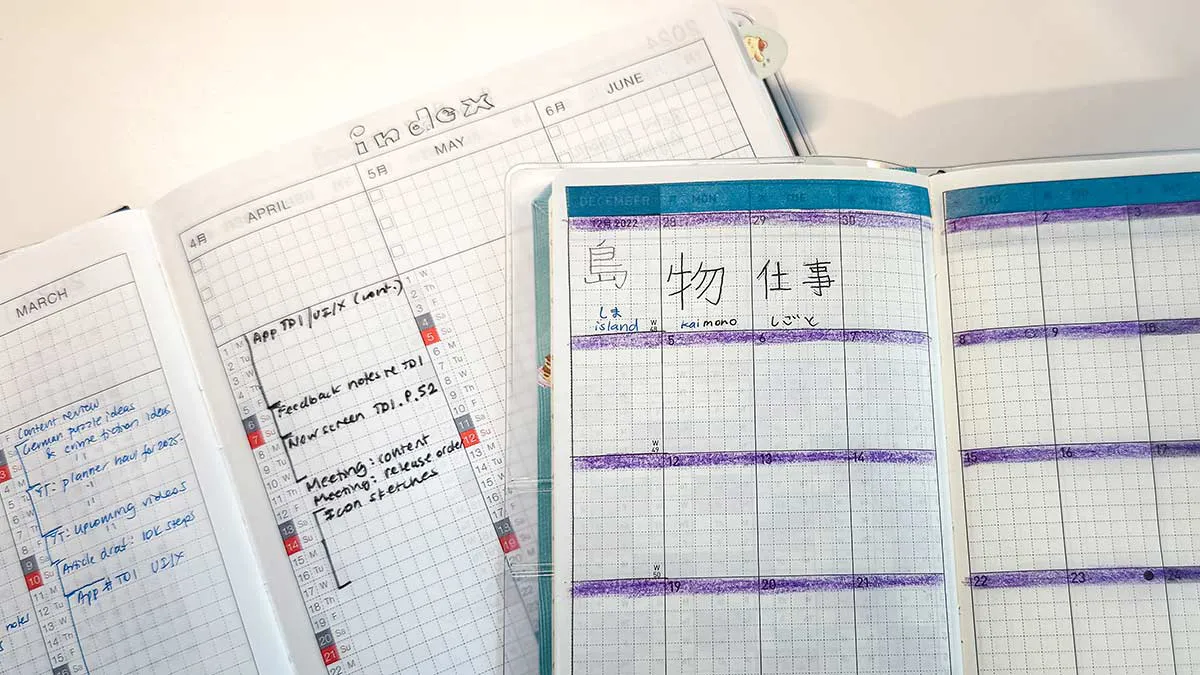
It's planner-buying season right now and with so many tempting options out there, you've probably bought more than you need, again. With an existing pile of unused notebooks, you're now unsure you'll find a use for these new planners. Well, we've come up with 10 ways to use a planner that isn't planning, journaling or tracking, and it isn't a doodle x junk x catch-all x scratch pad.
Before we discuss our 10 alternate uses, let's talk about the many benefits of selecting a planner over a regular notebook. The most obvious benefit is the unique range of sizes they come in, from 50 to 70-page weekly planners to 365+ day-per-page planners. There's even the Midori Hibino at 2 pages per day. The division of pages into days, weeks and/or months provides structures and constraints, as well as a format that can inspire the organization of information, data or images in ways you may not have considered otherwise. And if you do utilize the dated pages as the date they represent, you can track streaks, habits, smaller projects or time-limited challenges. So don't beat yourself up about overspending or buying, rather, let's talk about how you can put them to good use next year and beyond.
it isn't a doodle x junk x catch-all x scratch pad
1. Special projects
Let's begin with the most meaningful, satisfying and fillable purpose - the special project notebook. Do you have something you've always wanted to do or achieve? Do you need a lot of space for ideas, designing, planning and/or testing? Even if you aren't 100 percent ready to embark on that one big project or goal, a thick day-per-page planner with a cover you love (think Hobonichi HON in A5) might be the notebook to kick things off and inspire you to get things off the ground.
Divide up phases or subtopics by week or month. With a large 365-page notebook, you'll have more than enough space to tackle any large project, and it will likely last you more than a year.
Examples: home renovation, side hustle, new business, new job, personal research project, website, album, exhibition
2. Recipes
Use your planner as a recipe book using a day or week per recipe. Organize recipes by month or season and decorate accordingly. If you don't have four seasons, divide up months into meals (i.e. breakfast, lunch or dinner), drinks, temperature (e.g. hot / cold), or type of dish (e.g. soup, salad, dessert, snack, vegetarian, BBQ, gluten-free, etc.).
Depending how much of a cook you are or intend on becoming, a weekly planner might equally suit your needs. For example, in a weekly one or two-page spread, use Monday for required utensils, Tuesday and Wednesday for ingredients, and Thursday to Sunday for the stages of preparation, cooking instructions, serving suggestions and tips or modifications.
3. Work or study
Our Roadmap+ cofounders have been successfully using day-per-page planners for work and study for a few years now. One cofounder uses a Stalogy 365 Days Notebook and the other a Hobonichi HON, both in A5. The difference is the Stalogy is undated with a lot of space on the page, while the Hobonichi uses a lot of page real estate for the date, quotes and general whitespace. This may mean that you get more use out of the Stalogy than the Hobonichi, but the month, year overview and weekly pages of the Hobonichi can be used for other purposes, increasing its flexibility and possibilities.
For example, using the year overview pages in the Hobonichi (the pages at the beginning where 3 months run vertically next to each other as 3 columns) can be used as a Table of Contents or front index. So when you've finished using your notebook at the end of the day, fill in the days with a short description of what's on those pages. When you have 365+ pages, it'll come in handy.
And if you're using it as a study or subject notebook, you can use the columned pages we just talked about or the weeks and months pages as a glossary, summary of chapters or reading, vocabulary groups or a dictionary of characters (e.g. Japanese kanji).
4. Reading log
As a bookworm, it's easy to forget plots of books gone by, so keeping a reading journal makes sense. Use a page to record the details of each book you finish. If you're using a weekly planner, assign days to plot, your rating, an image, your favourite characters or quotes you want to remember. And just like seeing a pile of books, it's nice having a record of the books you've enjoyed and want to remember. Although dedicated reading journals are available on the market, when you use a planner you benefit in both structure and the flexibility to tailor the notebook to how you want to review and recall books.
If you read a lot and want to use a page-per-day planner, the extra pages you find in a Hobonichi, for example, could be used to keep track of books you want to read, favourite authors or even for tracking reading streaks, if you need a little push.
5. Ideas
Don't dismiss this usage by likening it to a junk or catch-all, because it isn't. An ideas notebook keeps all your undeveloped, late night, spur of the moment thoughts and ideas. From the absurd to billion-dollar business ideas, your ideas notebook can be about any one thing or many things.
If you're studying, you might have ideas about what you could research further or how you could implement something you learned in a different or more creative way than was taught. At work you might gain insights into how your internal or external clients do something that you think you could improve when you have time (or really want a pay rise) - write it down, sketch it out and come back to it when you can.
If you use one idea notebook for everything in life, you could split up the weeks or months into areas of your life so it's easier to find something when you need to on the fly.
6. Travel research & planning
Whether you're a frequent flyer or annual holidaymaker, a planner is the perfect notebook for planning a vacation. Depending how much you want to see and how long you want to be somewhere, you could divide up the weeks or months by location (i.e. town/city, country) and keep all your notes together in that part of the planner.
The only issue that may arise is if you want to bring the planner along. If so, it might be best to pick a weekly planner that's small and light, but won't hold as much information or as many trips as a daily planner.
7. Dreams
A dreams notebook can be of the aspirational type, actual dreams or both - it's up to you. Most productivity enthusiasts will opt for the aspirational dream notebook though, which fits perfectly into a dated and undated planner. Depending how detailed you want or need to be, use a single page, multiple pages, a week or a month - it's flexible. Like the work/study planner, use the vertical month overview or month pages as a TOC or index. If you dedicated weeks or a month to a dream or goal, you should have ample space for adding more detail when necessary, and if your planner has grid or dot grid pages, you can easily transform it into a project management tool while you work closer to making your dreams a reality.
8. Finances
By finances we mean anything to do with money. Whether it's spending, saving, budgeting, forecasting, there's nothing you can't track in your repurposed planner. If you have a grid or dot grid layout, you could even draw graphs that summarize chunks of your data, which can be very motivational when representing savings, forecasts, loan repayments or a mortgage.
If you want to keep things simple while you try it out, try an undated or page-per-day planner for maximum flexibility, and only track your expenses. Split months by type or account, such as home, study, entertainment, credit card, personal loan and so on. If your finances are ever-changing, you could record sequentially, page-by-page, leaving one or two months free at the end for tables, graphs and aggregations. Remember, two months in a day-per-page planner can hold over a year of weekly summaries.
9. Self-care
Actively looking after yourself mentally, physically and emotionally, is only part of the whole self-care picture. As you delve deeper into improving your health and well-being, a notebook abundant in space is also vital to staying the course. With a day-per-page you can divide up the months into separate guides covering the different areas of self-help (e.g. mental, physical, social, etc.). The remaining months can be used for tracking, inspiration, collecting encouraging images and quotes, or defining your own measures of well-being.
With a dedicated self-care notebook you'll have a go-to place when you most need it, complete with tips, how-tos, reflections and space to express yourself in the moment.
10. Short courses
With so many short courses at our fingertips online and face-to-face, buying a new notebook every time we take a short course simply doesn't make sense, it's also likely you won't need an entire notebook for them. For a taster course, there's nothing more suitable than an undated day-per-page planner, such as the Stalogy 365. However, if you're taking multiple courses at a time, a day-per-page with marked days and months might work better by converting months to courses, making it possible to take notes from multiple courses in parallel in the one notebook.
Addressing the quirks
Year on the cover: use a decal or large sticker, stick on a flat pin, create a new cover, use adhesive paper with your own decorations, or buy a folio for your notebook.
Printed dates: hide dates with washi tapes, paint pens, printed or coloured paper, stickers or white out. You may also get used to simply ignoring the date as you start adding your own content.
Tabled calendars / week views / month views: use these as an index or table of contents (e.g. March 1-17: wallpaper ideas).
Section markers: color a few centimetres of the edges of each page in a section, use page flags or small Post-Its or similar, or fold stickers to the edge of a page to create tabbed pages.
Category:
For updates on new tools and apps, subscribe to our newsletter. We only send these out when there's something truly exciting - we won't spam you.