An exam cramming technique
An exam cramming technique
By the Roadmap+ Team
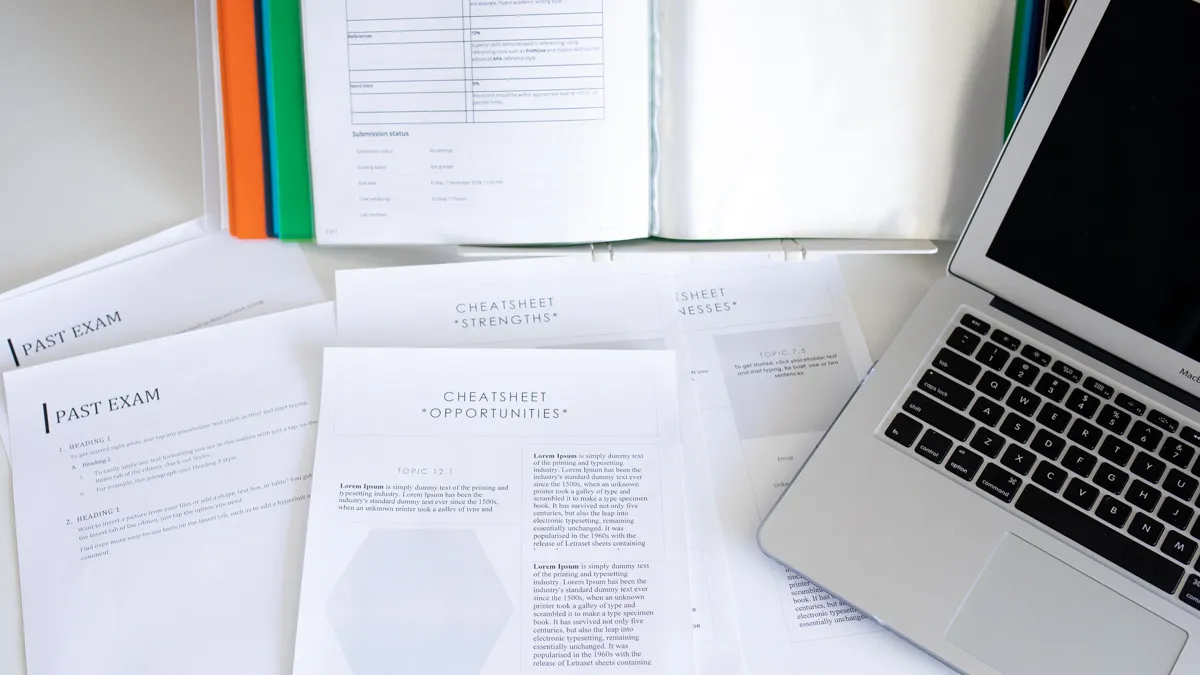
Whatever the cause, many of us often end a semester scrambling to catch up for an exam. The least constructive comments you tend to receive are usually along the lines of "you shouldn't have fallen behind" and "cramming is an ineffective study method". But we're not here to state the obvious. We're as guilty as the next person, so instead we analyzed and documented successful cramming techniques we've used to help you through your next stressful finals or exam period.
sometimes topics in Threats are best forgotten
Step 1: Assess and plan
How long do you have before the exam? Weeks? Days? Hours? How much of that time can you realistically dedicate to cramming? Divide the time into study sessions of at least an hour each with 10-minute breaks in between. Some might suggest shorter sessions or longer breaks, but you don't have time for that.
For example, you have three days between now and the exam. After reviewing sleep, travel time and other absolute commitments, you come to around 15 hours spare, which could be five hours per day with a 10-minute break each hour.
Step 2: Need-to-know basis
How many topics, chapters, weeks will be covered in the exam? This is the most critical information to have at hand as you need to focus only on what will be in the exam. This information could be found in:
- the subject's syllabus or objectives;
- past or mock exams;
- homework or tutorial questions;
- topic, week or chapter introductions and summaries;
- subject announcements via email or on the website;
- official exam hints and pointers from your lecturer; and
- simply ask your peers or lecturer.
Step 3: Study SWOT
That's right. We've modified marketing's well-established SWOT (Strengths, Weaknesses, Opportunities and Threats) analysis to chunk study materials into manageable study areas.
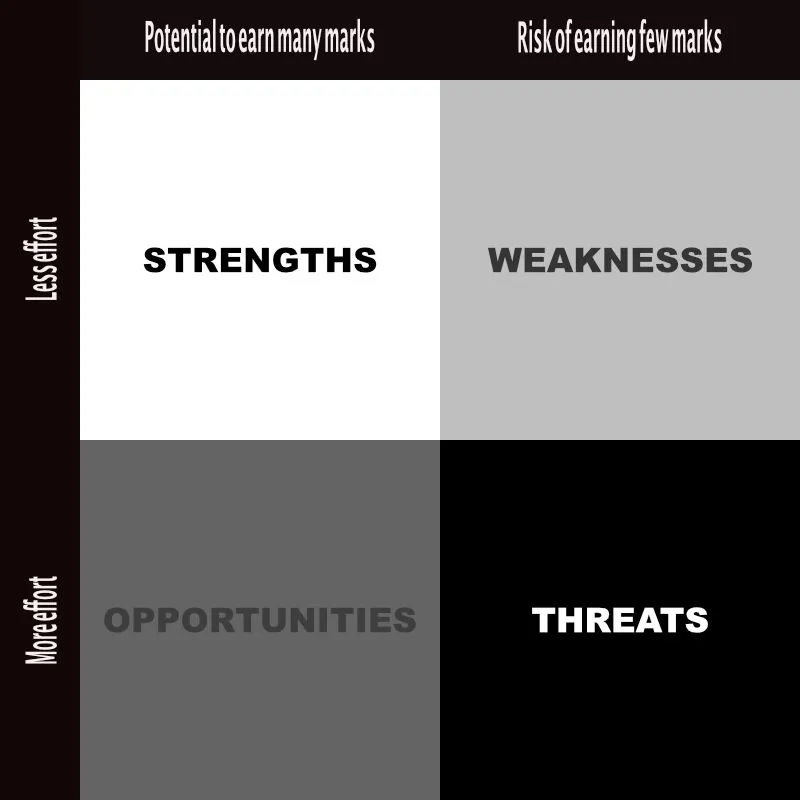
© 2018 RoadmapPlus / Study SWOT
To determine the most suitable focus areas, run through the materials that you've gathered, grouped by topic, which will likely be in the exam, and identify:
- Strengths: topics or sample questions you're fairly confident about or only need a refresher.
- Weaknesses: topics or sample questions you've covered but have forgotten or aren't completely comfortable with.
- Opportunities: topics or sample questions that might be worth more points and you have a chance at doing relatively well in but need to spend a bit more time on.
- Threats: topics or sample questions you haven't covered or that completely baffled you.
Sort the associated materials into piles on your desk or floor. Mark each pile with an ‘S', ‘W', ‘O' or ‘T' on a Post-It. Step 3 should only take 10-20 minutes.
Step 4: Session technique
A hands-on or 'active learning' approach supports deeper learning and memory retention, so writing down notes and answers is a must. However, there's no time for lengthy note-taking. The goal of Step 4 is to reduce the physical volume of materials and to summarize material as a means of learning while creating a succinct, ready-to-go reference for immediate review. Needless to say, as you summarize material and transfer material, the source material (that is, textbooks, lecture notes, notebooks, etc.) can be parked or filed out of sight until the exam is over.
When going through Strengths topics, begin cutting down on materials by compiling a cheatsheet. Cheatsheets can take the shape of a list, mindmap, flashcards, a collection of images (e.g. in a .ppt) or spreadsheet. Choose what suits the subject (e.g. simple list for math or images in a .ppt for science) and your learning style. Compiling the cheatsheet electronically makes it easier to reorganize ideas while you cram, but it will be helpful to print a fresh copy of your cheatsheet after each study session to reduce how much you carry around and allow you to review instantly. Create a separate cheatsheet for Strengths, Weaknesses and Opportunities to clearly identify the topics to focus on when need be.
Weaknesses topics must be summarized on the cheatsheet as soon as possible, too. Screenshots of essential imagery, workings and solutions to problems might be necessary. Move a Weakness to Strength at any point if you feel confident about it.
Opportunities topics will likely require more than a few summary lines. Like Weaknesses, screenshots could help, but summarizing too much on the cheatsheet may not provide enough detail to obtain more marks. Consider supplementing the cheatsheet with a dedicated worksheet for broader topics that will be worth more marks in the exam. The worksheet should contain longer descriptions, workings, images or colors to help you tackle more weighty exam questions in the level of detail that may be required. Don't forget to mark the worksheet under Opportunities.
Depending how much time you have left and your honest self-assessment, sometimes topics in Threats are best forgotten. You need to focus on what you know, what you can get better at and what's important in the exam. Starting something new or overly difficult will eat into your available time to master what you do have a chance in, which will compromise the entire exam and grade.
Our goal in Step 4 is to study by reducing study materials, feel less overwhelmed, have a ready reference (i.e. cheatsheet and worksheets), while learning actively. The earlier you complete the cheatsheet and optional worksheets, the more time you'll have for Step 5.
Step 5: Repeat. Delete.
The closer you are to exam day, the more frequently you should refer to your cheatsheet and extra worksheets. If you find yourself suddenly mind-boggled, try taking a break for a few hours, napping for 20-60 minutes, exercising or going for a walk.
Ask a peer, friend or family member to test you using only your cheatsheet and worksheets. Rewrite parts or redo questions that need more work. Try a mock or past exam with and then without your sheets. If there's something you know well (likely Strengths), summarize further or delete entirely. If something is too easy, it may be more of a distraction taking you away from Weaknesses and Opportunities that will add to your marks.
On the day of the exam, only bring what you need for a last minute review. Focus on Weaknesses or Opportunities. Skim Strengths. Once the exam begins, tackle the most challenging Opportunities questions first and don't stress when you notice the Threats. You should have enough marks in other areas to make up for lost Threats. Then get started on Weaknesses questions or switch between Weaknesses and Strengths for the remainder of the exam to gain some confidence and flow.
Good luck!
Category:
For updates on new tools and apps, subscribe to our newsletter. We only send these out when there's something truly exciting - we won't spam you.