Laptop vs desktop
Laptop vs desktop
By the Roadmap+ Team
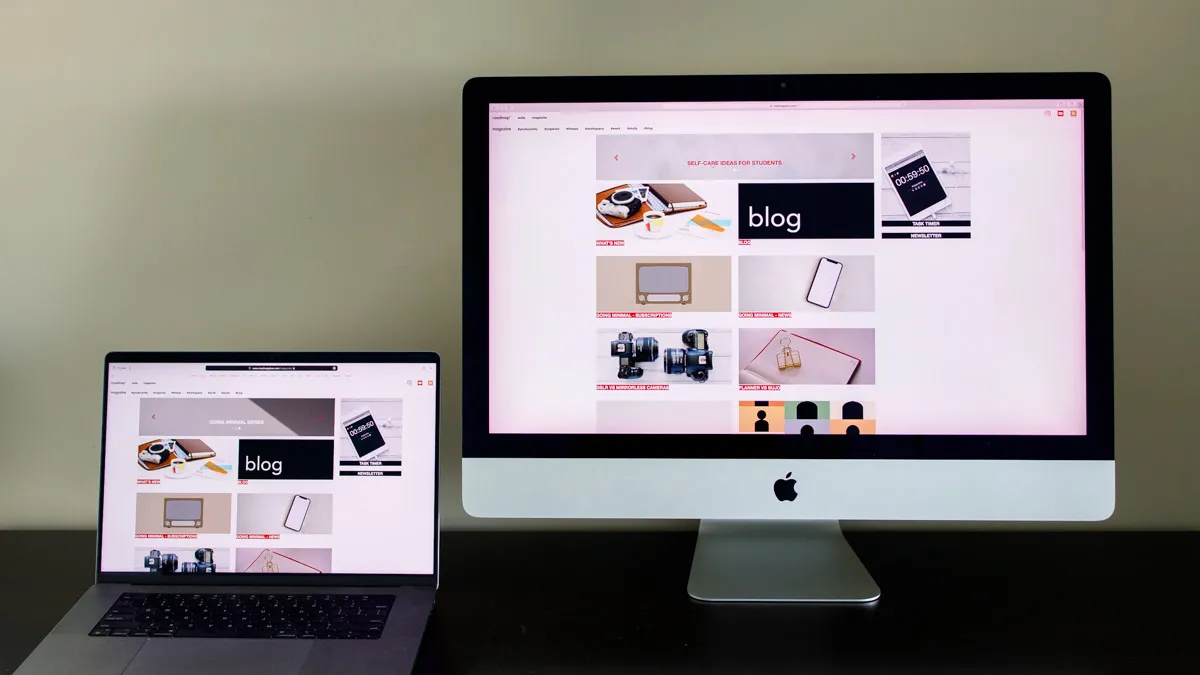
Not everyone needs a computer nowadays as many of us reportedly surf the web and access social media with a mobile device, usually a smartphone, but also tablets. But if you do find yourself in the market for a computer, one of the first questions you'll need to ask yourself is whether to go for a laptop or desktop. One of our team members recently converted to a MacBook after a decade of iMacs. After some deliberation, they made the decision based on three key factors summarized below.
sometimes the decision will boil down to want more than need
Productivity
If you're often on the go, a laptop is the obvious choice – it's a no-brainer. It's a strange kind of comfortable to be able to bring your digital life with you anywhere, whether it's working at a desk, on the sofa, public transport, a cafe or the library. If your employer allows you to bring your own laptop or freely install applications on it, you can easily accomplish a lot, anywhere, anytime. If the laptop is for personal use alone, pop it on the side of your work computer, use it on the commute, sofa or bed, and keep making progress on those side interests or hustles wherever you go. In terms of computers and devices, a laptop is the ultimate in maximum productivity. But they can also be addictive, requiring discipline and the ability to switch off, especially if you always feel swamped.
When your main computer is a desktop, everything takes place at the table it resides on. Of course, you might own a tablet that complements the rigid workspace that comes with a desktop, and that may work for some. For others, tablets are restrictive in what they can do and, depending on the manufacturer and operating system, mobile applications typically are vastly different from the version on your computer. In contrast to a laptop, if you struggle to maintain a healthy work/life balance, a desktop will encourage switching off at the end of the day as it inconveniently sits permanently in one position. Its fixed location demands focus when working, studying, even putting together a playlist. And when you're away from your desk you're away from the tools that allow you to work, even if you feel like you should.
In short, if you struggle to maintain a work/life balance and don't need to travel for work, a desktop will tie you to your desk and improve your odds of walking away from it at the same time. If you need to work anywhere and have work/life balance under control, choose a laptop, but keep your hours in-check and readjust as necessary.
Ergonomics
When it comes to having an ergonomic set-up, a desktop setup is the clear winner. Extended work period will be physically less taxing with a large screen, a separate keyboard, separate mouse and a suitable chair, which essentially completes the ergonomic checklist. On a laptop, you take the computer out of your bag and get straight to work, but you'll face a small screen which tends to lead to poor posture or eye strain, while built-in keyboards and trackpads often cause wrist pain.
As you would expect, a laptop will see you working in far from comfortable conditions, simply because you can. You can ergonomic-ize your workspace by investing in an external monitor and peripherals, but unless you carry an apt bag and commit to setting up at appropriately configured tables and chairs, a full setup is usually a reality exclusively at designated work or home desks. Therefore, to avoid fatigue and chronic physical issues, the undisputed choice would be a desktop.
Performance
Although the gap in performance is decreasing, often there are significant differences between a desktop and a laptop. A large tower-style desktop will have more powerful components compared to a laptop. As individual components can be upgraded over time, performance can also be improved without a substantial outlay if something breaks or becomes outdated.
Generally, you know if you fall into the group of users who need the additional power that a full-size desktop provides. For everyone else, it may be weighing up the benefits of a laptop versus an all-in-one desktop, such as the iMac or a Windows equivalent. In this case, the components used are generally the same as a laptop's, which means you can expect similar performance.
Decision
Despite desktops coming out consistently strong, the choice in our case came down to convenience and trying something different. Everyone's needs differ and sometimes the decision will boil down to want more than need. Provided the computer performs optimally and you make strides to switch off, wind-down and swiftly respond to what your body is telling you, a desktop will keep in you check, but through minimal workspace modification and self-discipline, it will likley come down to how much you want or need to access your computer.
Category:
For updates on new tools and apps, subscribe to our newsletter. We only send these out when there's something truly exciting - we won't spam you.